
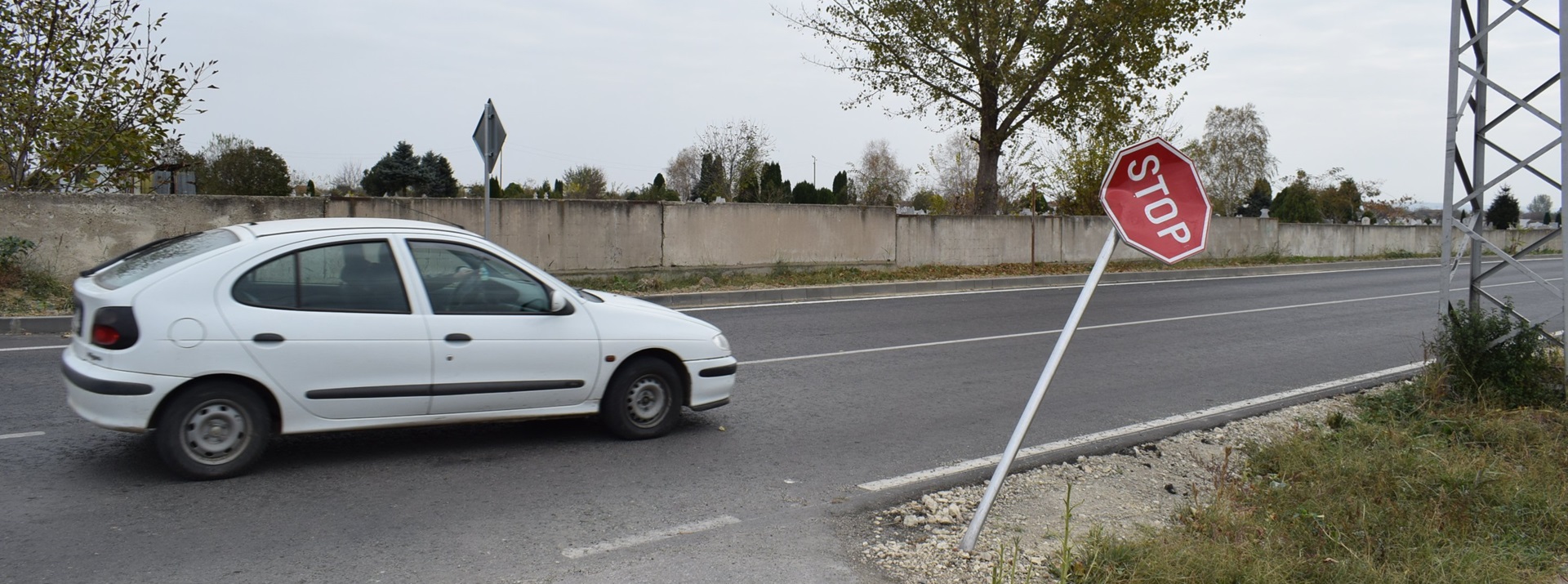

Road signs are a fundamental element of traffic management, and their damage or destruction in a road traffic accident (RTA) can lead to serious safety risks. The question of who should bear the costs for restoring the signs after an incident is important for municipalities and state authorities, as well as for insurers and the drivers themselves.
In this article, we will examine who bears responsibility for paying for damage to road signs in an accident and what the mechanisms for cost recovery are.
1. What damage to road signs is caused in an RTA?
In an accident, road signs can be:
- Bent or distorted as a result of impact
- Completely destroyed (broken or torn out of the ground)
- Darkened or damaged by spilled oils, paints or other substances
Such damage can lead to reduced visibility of the signs, which increases the risk of further incidents and creates hazards for drivers and pedestrians.
2. Who bears responsibility for paying for the damage?
Restoring road signs after a road traffic accident (RTA) requires clear mechanisms for bearing the costs. Responsibility for the damage depends on whether an at‑fault party has been identified and what insurance mechanisms are in place.
A. The at‑fault driver
If a specific driver is responsible for the accident, they bear the legal and financial liability for the damage caused to the road infrastructure, including the road signs. In this case:
- If the driver has a valid “Civil Liability” insurance policy, the costs of restoration are covered by the insurance company after a claim is filed by the relevant institution.
- If the driver does not have insurance, they must pay for the damage out of their own pocket. In the event of refusal, the state authorities may take legal action to recover the amount.
- If the driver has consumed alcohol or drugs, the insurance company may refuse to cover the damage and file a recourse claim against them, seeking the amount through the courts for the damaged road signs.
B. The insurance company
In most cases, when the at‑fault driver is known and has a “Civil Liability” policy, the insurer covers the costs of restoring the road sign. The procedure usually proceeds as follows:
- The municipality or the Road Infrastructure Agency (RIA) prepares an assessment of the damage and submits a claim to the insurer of the at‑fault driver.
- The insurance company reviews the claim, carries out its own inspection and approves the payment.
- The funds are transferred to the responsible institution, which organises the repair or replacement of the road sign.
Delays may occur if the insurer contests the causes of the incident or if there are discrepancies in the damage assessment.
C. The state or the municipality
In some cases, the costs of restoring road signs remain the responsibility of public institutions:
- In the event of an RTA with an unknown or hit‑and‑run driver – if the driver leaves the scene and cannot be identified, the restoration of the sign is financed from the budget of the respective municipality or RIA. In some cases, the Guarantee Fund may also be used.
- In the event of natural disasters and force majeure circumstances – if the sign is damaged by a storm, flood or other natural phenomenon, the repair is financed by the institution responsible for maintaining the road infrastructure.
- In the event of vandalism – if the sign is deliberately damaged by unknown persons, the institutions may request an investigation, but often they cover the costs themselves.
3. Procedure for restoring damaged road signs
In the event of an incident leading to damage to road signage, several main steps are followed:
- Reporting the incident – The police carry out an inspection and document the damage caused.
- Drawing up a report – The report describes the damage caused, the at‑fault person and the other participants in the incident.
- Filing a claim – The institution responsible for the road infrastructure (municipality or RIA) submits a claim to the insurer of the at‑fault driver.
- Restoring the signs – After the claim is approved, the damaged signs are replaced.
4. What is the cost of restoration?
The cost of replacing a road sign depends on several factors:
- Type and size of the sign
- Materials used (standard or reflective signs)
- Installation and labour costs
Typically, standard road signs cost between 100 and 500 BGN, but more specialised signs, such as those with LED lighting or electronic boards, can cost over 2000 BGN.
5. What happens if the at‑fault driver flees the scene?
If the driver who caused damage to a road sign leaves the scene without being identified, the responsibility for the repair usually falls on the state or the municipality. In such cases:
- The costs may be covered by the Guarantee Fund, which pays compensation for damage caused by uninsured or unidentified vehicles.
- If the at‑fault driver is later identified, they may be obliged to pay the costs retroactively.
6. How to protect yourself from unexpected costs in an RTA?
To avoid paying high amounts in the event of an accident, drivers should ensure that:
- They have a valid Civil Liability policy and, if possible, Comprehensive insurance
- They comply with speed limits and traffic rules
- They immediately notify the competent authorities in the event of an incident
Damage to road signs in an accident is a serious problem that can lead to additional costs for drivers, insurers and the state. It is important for the at‑fault driver to accept responsibility for the damage, with the costs usually being covered by their insurance policy. The timely restoration of road signs guarantees the safety of all road users and prevents subsequent incidents.
If you are looking for high‑quality and durable road signs, SignalPro offers solutions that meet all regulatory requirements and ensure durability and reliability.

