
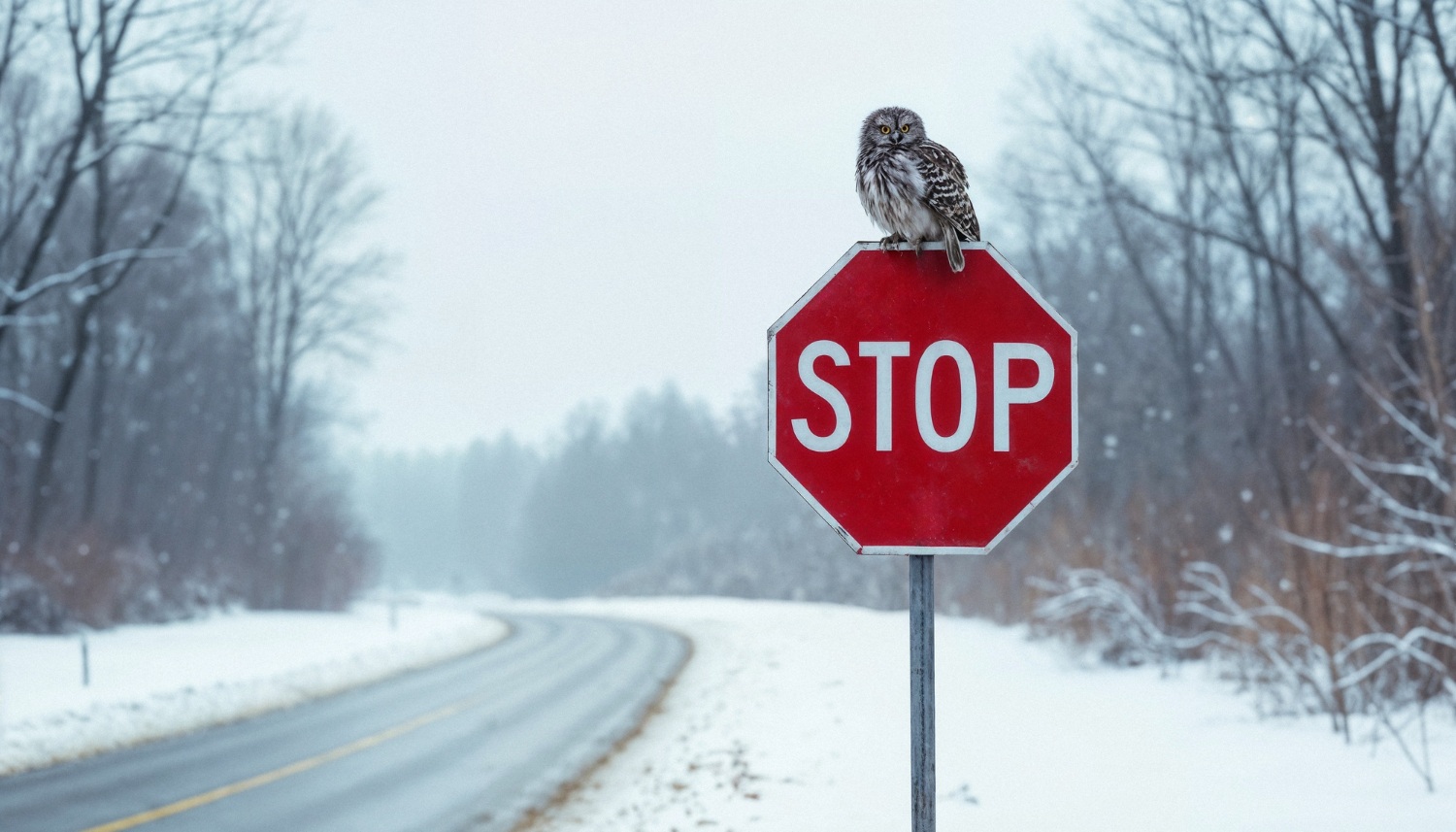

Winter road signage has to work in the harshest conditions of the year: short days, fog, snow, ice and road salt. A sign that can be seen from far away in summer may be covered in mud, frosted over or completely hidden behind a snowbank in December. That is why preparation should be finished before the first snow and not after it, and October is the right time to do it.
Winter road signage: why it needs separate preparation
The winter season puts a load on signs, marking and equipment that they do not face during the rest of the year. In Bulgaria, the Road Infrastructure Agency traditionally starts winter maintenance of national roads on 1 November (source in Bulgarian), and municipalities and managers of private sites follow a similar schedule. There are several reasons why winter road signage is more vulnerable:
- Less daylight. After the clocks change at the end of October, many trips to and from work take place in the dark, and the visibility of signs depends entirely on the reflective sheeting.
- Snow on the marking. Road marking is often fully covered, so vertical signs and delineators remain the driver’s only guidance.
- Salt and moisture. Road salt speeds up corrosion of poles, brackets and metal bases, especially with cheap materials without a suitable coating.
- Mechanical damage. Snowploughs and piled-up snow can bend or knock over poorly fixed signs and posts.
Checking signs before the season
The most effective step towards reliable winter road signage is a simple inspection of all the signs you manage in October. It should cover:
- Cleanliness and visibility: clean signs of dust, moss and dirt, and cut back branches that hide them.
- Condition of the sheeting: faded, cracked or peeling reflective sheeting loses much of its reflectivity and must be replaced.
- Fixing: tighten brackets and bolts, then straighten and secure leaning poles.
- Corrosion: treat or replace poles and bases with visible rust before salt finishes the damage.
If the inspection shows that signs are out of date, it makes sense to align the replacement with the requirements of Bulgaria’s new road sign regulation, so you do not have to replace them again a year later.
Marking the road edge and obstacles
When snow hides the shoulder, the kerb and the marking, drivers and snowploughs rely on vertical guides. This is the part of winter road signage that is most often underestimated. On roads outside settlements and on internal roads at warehouses and parking areas, delineator posts with reflective elements show exactly where the carriageway ends. In urban areas, bollards and anti-parking posts with reflective tapes play the same role and protect pavements, entrances and green areas from accidental entry on snow-covered ground. Posts should be tall enough to stay visible above the expected snow depth.
Mirrors for site and garage exits
Exits from garages, warehouses and yards with limited visibility become especially dangerous on slippery surfaces, where the braking distance increases many times over. Road mirrors let the driver see approaching vehicles before pulling out onto the road. For winter conditions, choose mirrors made of durable materials, mounted on a sturdy pole at a height where snow will not bury them.
Temporary signalling for winter emergencies and repairs
A collapsed road surface, a water main failure or an urgent repair in winter calls for a quick response. Temporary signs in such cases must be even more visible than in summer, with cones with reflective tapes, warning lights and signs placed further ahead of the obstacle because of the longer braking distance. Any such intervention on the road requires approved temporary traffic management. For choosing cones, see also our article on how to choose the right cones for road repairs.
Parking areas, warehouses and commercial sites
Owners of private sites are responsible for safety on their own premises. Well prepared winter road signage at a parking area or logistics base includes clearly marked pedestrian crossings, speed limit signs, marked zones for storing cleared snow so that it does not hide the signs, and reflective elements on ramps and columns. You will find more ideas in our articles on safety around commercial sites and parking lots and road solutions for warehouses and logistics.
Frequently asked questions
When should winter preparation of road signage start?
Ideally in October, before the clocks change and before winter maintenance starts on 1 November. This leaves time to order and install replacements before the weather makes work on site difficult.
Which class of reflective sheeting suits winter conditions?
In fog, precipitation and darkness, a higher reflectivity class gives noticeably better visibility. Class RA2 or microprismatic sheeting is usually used on higher-speed roads, and the choice must match the road category.
How do I protect poles from road salt corrosion?
Use hot-dip galvanized poles and brackets or another protective coating, and check the bases at least once a year. Read more about pole quality in our article are your traffic signal poles certified?
Who is responsible for signage at a private parking area in winter?
The owner or manager of the site. After an incident caused by missing or hidden signage, liability is sought from them, so clearing snow from signs should be part of the site’s winter maintenance plan.
Well prepared winter road signage is one of the cheapest safety measures. Clean signs, new sheeting, secured poles and a marked road edge cost far less than the consequences of a single accident. Municipalities, road administrations and site owners who finish their preparation in October meet the first snow without surprises.
Signal Pro supplies road signs, delineators and anti-parking posts, road mirrors, cones, chains, and warning and reflective tapes for the winter season. Browse the catalog and online store or contact us for advice on your site and its winter road signage.
Phone: +359 882 578 060 · Email: office@signalpro.bg · Website: signal-pro.net

